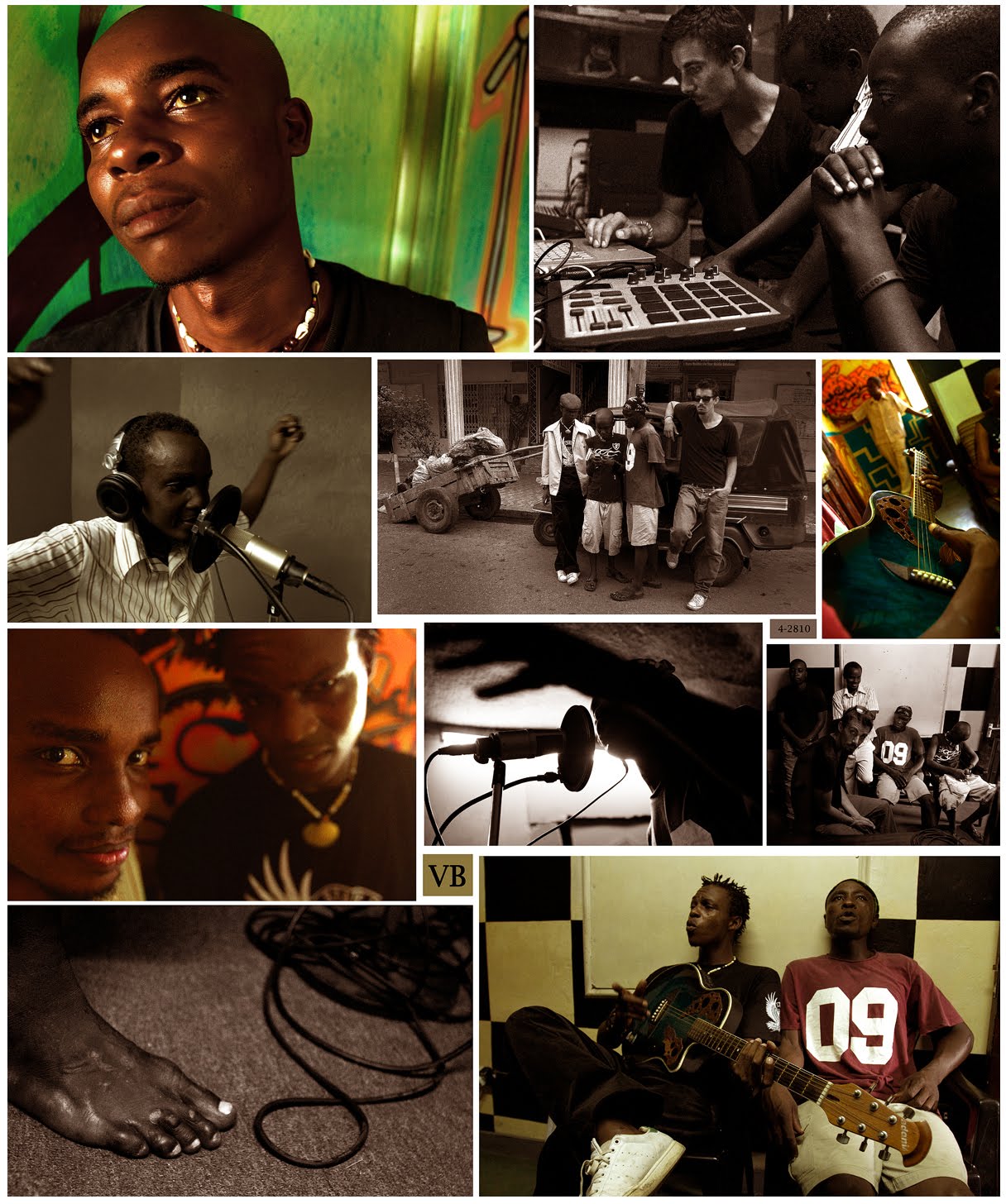
We arrived by motorcycle. We rode slowly, 3 per bike, climbing fertile farmland hills ripe with bananas and beans and maize, waving at the people breaking from their tills to see who the pastey visitors are, wondering where we possibly were going just as much as we were. No taxis or matatus come to this region. The road is meager and the population more so. We're now roughly a 40 minute drive outside Mombasa's bustling city of spice, and I'm arguing with my mind trying to convince it that we're still in Kenya, and I haven't somehow been transported overnight to Kauai.
A central figure in our film, Simon (featured in an earlier post), caught on to our objectives for the film and requested in awkward English we take a journey with him to a place he's spent much time. "Its a dam, where kids and families are. They sleep on the streets. You should talk with them. There are many." Ok Simon. Take us. And if it isn't what we're looking for, maybe we can put our feet in the water and cool off. God knows our crew is getting tired of this.
A few more turns in the washboard road, and we come upon a giant hole in the earth replete with every part and particle and solvent and skin known to man. What we didn't realize, was that Simon was leading us to a "dump". A place where there is a 'village' of people living outside of a tribal village, a city, or any understandable social organization, where many children run rogue and man resembles more a hyena feeding on the last carcass on earth, than a sentient being having opportunities to make conscious decisions and delightfully pick and choose his desired creature comforts.
We arrived by motorcycle. I hopped off the sweaty, ripped-rubber seat and took my camera to peer deeper, beyond the precipice of flowing trash, into the gorge where all Mombasa kindly donated their leftovers. The noxious fumes of fish, fish bones, fish parasites, fish guts and feces rose up like misty vapors from a waterfall's pool. Thick and dense and utterly overwhelming, it seemed impossible that people would be swarming this area, nonetheless calling it home. We walked about 3 minutes down a dirt path past belligerent idle men reminiscent of the tar-footed drunkard mannequins on the 'Pirates of the Caribbean' ride at Disneyland, and came to a 'village' of people who had set up 'home' for generations atop the transforming soil what was plastics and metals and bones and rotted food and flies, many flies. They had constructed abodes from (the lucky ones) car hoods and plastic grocery bags and solidified 'dump' bricks (literally compacted trash and animal-carcass-rotted-flesh-soil that had hardened like dung used in traditional hut-sculpture). There were pathways between trash heeps and remaining trees...their 'roads' I suppose...which they travelled en route to 'work' and back each day. They had laundry lines (I have no clue as to where or how far they must search for water) strung from 'hut' to 'hut' supporting drying shirts and various prizes from the dump; the treasures amongst the trash. This was home. And for some- all they ever and would ever know of home.
After an hour or so interviewing the gracious and inviting families struggling in the humid, putrid air, we travelled further down the road another 5 minutes and stumbled upon a group of primary school-aged children and frail, elderly men and women swarming like bees amongst the freshly dumped truck-loads of trash. As though running for easter eggs on a freshly mowed lawn of green grass, these children and great-grandparents were hands and heads deep in colorful mountains of rotted food and used condoms, needles, and body parts, eagerly in search of food to bring home to their families and parts of metal, glass, and plastic which they could sell for minor funds.
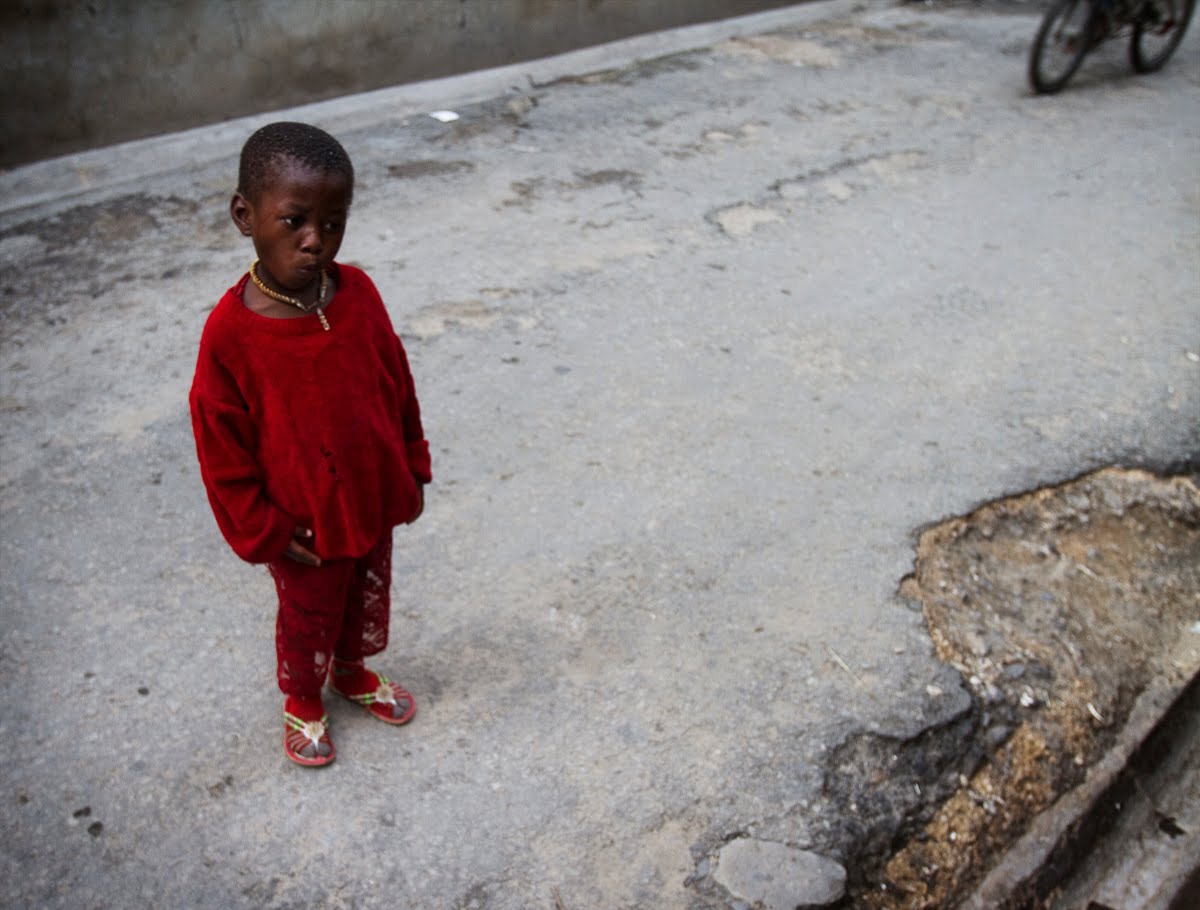
Our film, documenting the lives of street children and the communities from which they sprout, has lead us to some wild and desperate places that I have yet to comprehend. I've flashbacks from tattered homes we've entered or stories from grandmothers who have survived mass rape and slaughter of their entire humble villages. But none of these experiences were quite like this. Babies donning dresses created for Christmas day are robbed from any glimpse of child play and rather begin work at age 4, combing Dante's Inferno for inedible potential to keep their cells alive while phyla of insects crawl through their hair follicles and into their nailbeds, finding home for the next generation, and villanous toxic waste fumes creep hot and fast into every fiber and cell of the little developing angels' bodies. This is life. This is the only option for survival.
Somehow, the children possess eyes richer than a university library and crack sideways smiles when the white woman with the camera is fixated on their hands which host nearly every smashed fruit, carcass-grease, and auto-liquid known to man.
If your family cannot provide food and a shelter- whatever the reasons...potentially lack of work, drug/alcohol abuse, tribal rifts, traditional dependence on the child as the bread-winner while living in a modern Kenya-either way, you find yourself here, as a left-over byproduct of a transforming community, surviving on its left-over byproducts. The city streets are hard, lonely and dangerous, but the dump is soft and abundant and toxic.
She's got slime all over her little body, but, I suppose, she sure has a beautiful dress.
xo


 A very thoughtful Christmas gift: super-stylin-thermal-wicking-socks, meant to fend off the Brooklyn chill, put to good use in Mombasa as sweat receptacles under my anti-glue-kid armor.
 The talent search continues...
 We found Simon. He's about 4 inches taller, voice deeper, and...he's been nominated as Village Beat's first grant recipient. En route to Jomo Kenyatta National Airport last year, minds full of memories and hearts exploding, we received a final phone call to our Kenyan cell phone. It was Simon (Kalibo), borrowing a phone from the street, letting us know he made use of the cooking materials we donated to him in hopes he would fulfill his immediate dream: selling hard-boiled eggs on the street as a way to get up and out of Barachi Field, off the streets and closer to his goals of becoming a cafe owner. "I've sold eggs today! I made enough to buy for tomorrow." --Perhaps the best phone call I've received in my life.
 This trips been a little more rough on the body, to say the least. It's especially wonderful when the hotel is out of water for 3 days, your eyes are pussing and burning, and all you can do is roll around like a caterpillar aware of butterflyhood while taking in the sound from Mombasa's two tv channels: Aljazeera and Bollywood TV. As a wise man once told me...take a deep breath and say, "Oh, Kenya."