 A very thoughtful Christmas gift: super-stylin-thermal-wicking-socks, meant to fend off the Brooklyn chill, put to good use in Mombasa as sweat receptacles under my anti-glue-kid armor.

Thursday, May 20, 2010
Thanks Kelsy
A very thoughtful Christmas gift: super-stylin-thermal-wicking-socks, meant to fend off the Brooklyn chill, put to good use in Mombasa as sweat receptacles under my anti-glue-kid armor.

Let's Hear It
 The talent search continues...
After Mombasa gave our soundtrack some soul, we're back in Nairobi looking for knuckles.
Wednesday, May 5, 2010
All Grown Up
 We found Simon. He's about 4 inches taller, voice deeper, and...he's been nominated as Village Beat's first grant recipient. En route to Jomo Kenyatta National Airport last year, minds full of memories and hearts exploding, we received a final phone call to our Kenyan cell phone. It was Simon (Kalibo), borrowing a phone from the street, letting us know he made use of the cooking materials we donated to him in hopes he would fulfill his immediate dream: selling hard-boiled eggs on the street as a way to get up and out of Barachi Field, off the streets and closer to his goals of becoming a cafe owner. "I've sold eggs today! I made enough to buy for tomorrow." --Perhaps the best phone call I've received in my life.
Upon return to Mombasa almost one year later, Kalibo has sold enough eggs to get himself into a vocational school (he paid the first semester and a government org affiliated with Unicef picked up the second and third) where he is learning the craft of catering and is housed and fed. He's finished now, and in effort to be competitive (or have any chance of a job) and keep a roof over his head, he must enroll in a specialty course- 'cake decorating'. It's a 2 month-long practice, meeting 4-7pm, where he will learn to create the best frostings, fillings, and colorful lion and Kenyan pop-artist faces and designs you've ever seen. (Picture coming of my birthday cake in 3 months.)
To participate in the course, Kalibo needs 9,000 Ksh tuition, 200 Ksh registration fee, 4,000 Ksh ingredient materials, 1,700 Ksh kitchen utensils, and 1,200 Ksh uniform expenses. That's a grand total of 16,100 Ksh which roughly equals $206 US dollars.
Taking the course allows him meager room and board until December 1, an internship at the local hospital's kitchen, and the prospect of a job come Christmastime. Smiles and updates will be frequent.
Please consider helping us with this project. Kalibo will bake you a cake. :)
xo

Tuesday, May 4, 2010
Parasites to Pink Eye
 This trips been a little more rough on the body, to say the least. It's especially wonderful when the hotel is out of water for 3 days, your eyes are pussing and burning, and all you can do is roll around like a caterpillar aware of butterflyhood while taking in the sound from Mombasa's two tv channels: Aljazeera and Bollywood TV. As a wise man once told me...take a deep breath and say, "Oh, Kenya."
The Wishing Well

Backstroke in a slow, golden river.
Skating aloft, across a tabletop of raindrops.
Striding through grasslands of arms and hands in the impenetrable suede of a lion.
Grateful with each day, to be carried through the dark.
Sunday, May 2, 2010

Friday, April 30, 2010

Wednesday, April 28, 2010
Jeddan Sessions Part I: Barachi Boys
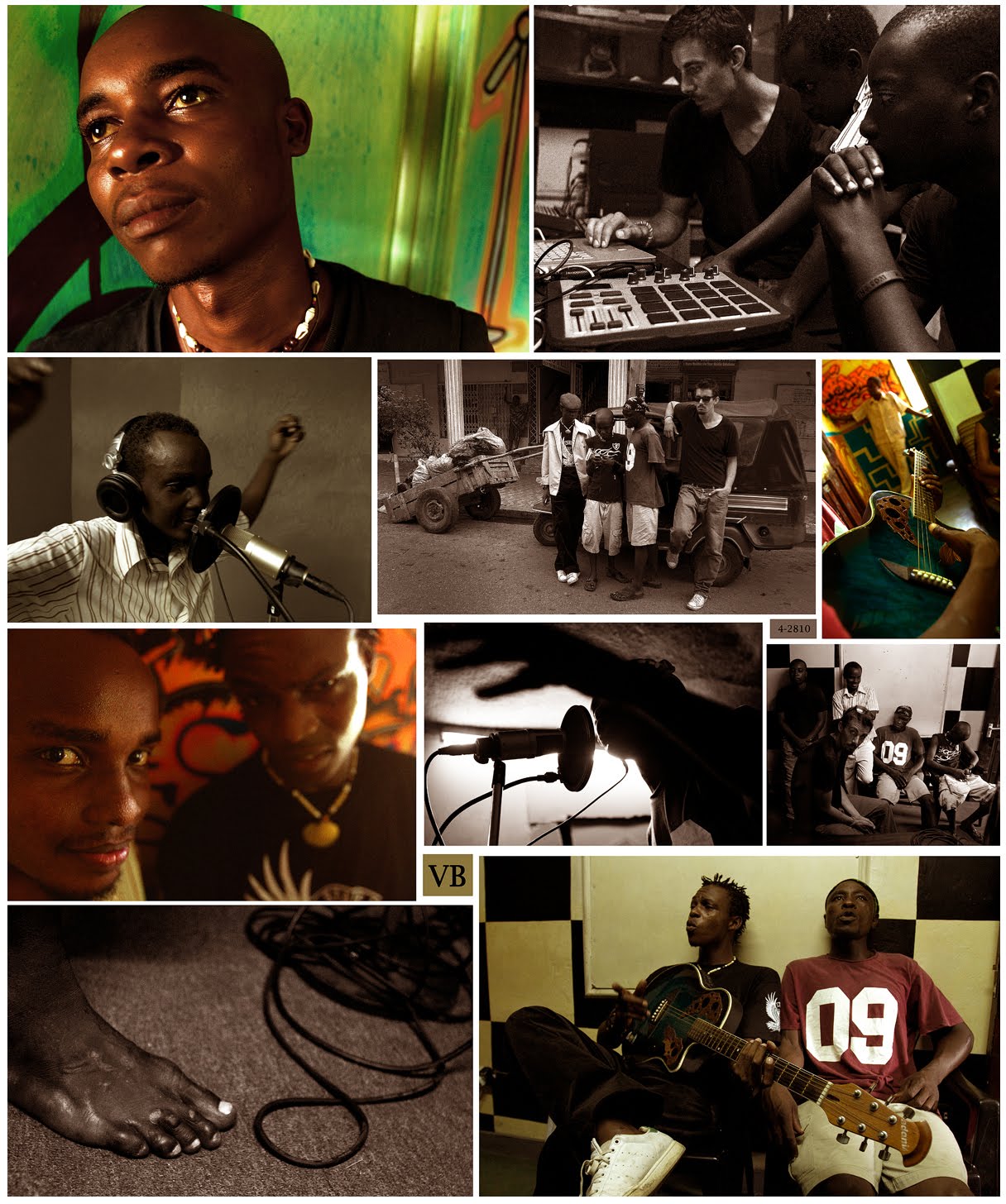
Recently we've been recording a lot of music for the film and accompanying album. Today we brought in some of the boys from the Barachi base to the Jeddan Studios in Chuda, Mombasa. Their big day finally arrived after what must have been a very long night under plastic tarps, hiding from 6 hours of El Nino-style monsoon rain. We gave them a week's heads-up to get some rhymes together about their lives on the street. Erik led the way on the boards. Getting the stories and verses on the page is no problem- they've been spat a thousand times to each other with little else to do beyond the daily hustle for a meal. But getting some...rough-around-the-edges artists to use mics, take cues, direction, diction, (2.5 languages to juggle), in a booth hotter than the sun made me appreciate the Snoop booming in the taxi bus on the way home like never before.
Monday, April 26, 2010
Thrown Away

Nightmarish. Too much, too fast, out of control, coming for you as if it will never stop, you're to blame, gotta run but can't, can't breathe, feet sink in, invisible trouble booms like a mob toppling an iron door, dark laughter advances from behind, the sky looks unfamiliar, the wailing of fresh tragedy, just before you are consumed, it ends, you awaken, but its echoes remain through the day and you're left shaken, quietly contemplating how this experience ripped your psyche.
If you go to Dandora, Nairobi's dump site, you can feel these things in the broad daylight of your waking life.
We returned to this apocalyptic place to interview a group of young boys and a family who live and work here- citizens of an alternative Africa, drowning in the slipstream of progress.
Sunday, April 25, 2010
The Barachi Paradox

Haven't we all held something like this? It's a posture of comfort threatened. In this gallon tin is amusement, glints of optimism, a sated appetite and a few hours of sleep. To take it all away creates a pretty serious void.

The King lives...
Does one thing lead to another or is causality just a silly routine we use to make sense of things? Who is the buck-toothed, laughing maniac behind the wheel of our big ol' coconut truck rumbling through the cosmos? What is the sinew in space-time that connects the breath-holding confessions of a prostitute with the miraculous performance of this guy, occurring simultaneously, just outside the door? Kenya. Kenya is the sinew.
Saturday, April 24, 2010
Your Dress is Beautiful

We arrived by motorcycle. We rode slowly, 3 per bike, climbing fertile farmland hills ripe with bananas and beans and maize, waving at the people breaking from their tills to see who the pastey visitors are, wondering where we possibly were going just as much as we were. No taxis or matatus come to this region. The road is meager and the population more so. We're now roughly a 40 minute drive outside Mombasa's bustling city of spice, and I'm arguing with my mind trying to convince it that we're still in Kenya, and I haven't somehow been transported overnight to Kauai.
A central figure in our film, Simon (featured in an earlier post), caught on to our objectives for the film and requested in awkward English we take a journey with him to a place he's spent much time. "Its a dam, where kids and families are. They sleep on the streets. You should talk with them. There are many." Ok Simon. Take us. And if it isn't what we're looking for, maybe we can put our feet in the water and cool off. God knows our crew is getting tired of this.
A few more turns in the washboard road, and we come upon a giant hole in the earth replete with every part and particle and solvent and skin known to man. What we didn't realize, was that Simon was leading us to a "dump". A place where there is a 'village' of people living outside of a tribal village, a city, or any understandable social organization, where many children run rogue and man resembles more a hyena feeding on the last carcass on earth, than a sentient being having opportunities to make conscious decisions and delightfully pick and choose his desired creature comforts.
We arrived by motorcycle. I hopped off the sweaty, ripped-rubber seat and took my camera to peer deeper, beyond the precipice of flowing trash, into the gorge where all Mombasa kindly donated their leftovers. The noxious fumes of fish, fish bones, fish parasites, fish guts and feces rose up like misty vapors from a waterfall's pool. Thick and dense and utterly overwhelming, it seemed impossible that people would be swarming this area, nonetheless calling it home. We walked about 3 minutes down a dirt path past belligerent idle men reminiscent of the tar-footed drunkard mannequins on the 'Pirates of the Caribbean' ride at Disneyland, and came to a 'village' of people who had set up 'home' for generations atop the transforming soil what was plastics and metals and bones and rotted food and flies, many flies. They had constructed abodes from (the lucky ones) car hoods and plastic grocery bags and solidified 'dump' bricks (literally compacted trash and animal-carcass-rotted-flesh-soil that had hardened like dung used in traditional hut-sculpture). There were pathways between trash heeps and remaining trees...their 'roads' I suppose...which they travelled en route to 'work' and back each day. They had laundry lines (I have no clue as to where or how far they must search for water) strung from 'hut' to 'hut' supporting drying shirts and various prizes from the dump; the treasures amongst the trash. This was home. And for some- all they ever and would ever know of home.
After an hour or so interviewing the gracious and inviting families struggling in the humid, putrid air, we travelled further down the road another 5 minutes and stumbled upon a group of primary school-aged children and frail, elderly men and women swarming like bees amongst the freshly dumped truck-loads of trash. As though running for easter eggs on a freshly mowed lawn of green grass, these children and great-grandparents were hands and heads deep in colorful mountains of rotted food and used condoms, needles, and body parts, eagerly in search of food to bring home to their families and parts of metal, glass, and plastic which they could sell for minor funds.
Our film, documenting the lives of street children and the communities from which they sprout, has lead us to some wild and desperate places that I have yet to comprehend. I've flashbacks from tattered homes we've entered or stories from grandmothers who have survived mass rape and slaughter of their entire humble villages. But none of these experiences were quite like this. Babies donning dresses created for Christmas day are robbed from any glimpse of child play and rather begin work at age 4, combing Dante's Inferno for inedible potential to keep their cells alive while phyla of insects crawl through their hair follicles and into their nailbeds, finding home for the next generation, and villanous toxic waste fumes creep hot and fast into every fiber and cell of the little developing angels' bodies. This is life. This is the only option for survival.
Somehow, the children possess eyes richer than a university library and crack sideways smiles when the white woman with the camera is fixated on their hands which host nearly every smashed fruit, carcass-grease, and auto-liquid known to man.
If your family cannot provide food and a shelter- whatever the reasons...potentially lack of work, drug/alcohol abuse, tribal rifts, traditional dependence on the child as the bread-winner while living in a modern Kenya-either way, you find yourself here, as a left-over byproduct of a transforming community, surviving on its left-over byproducts. The city streets are hard, lonely and dangerous, but the dump is soft and abundant and toxic.
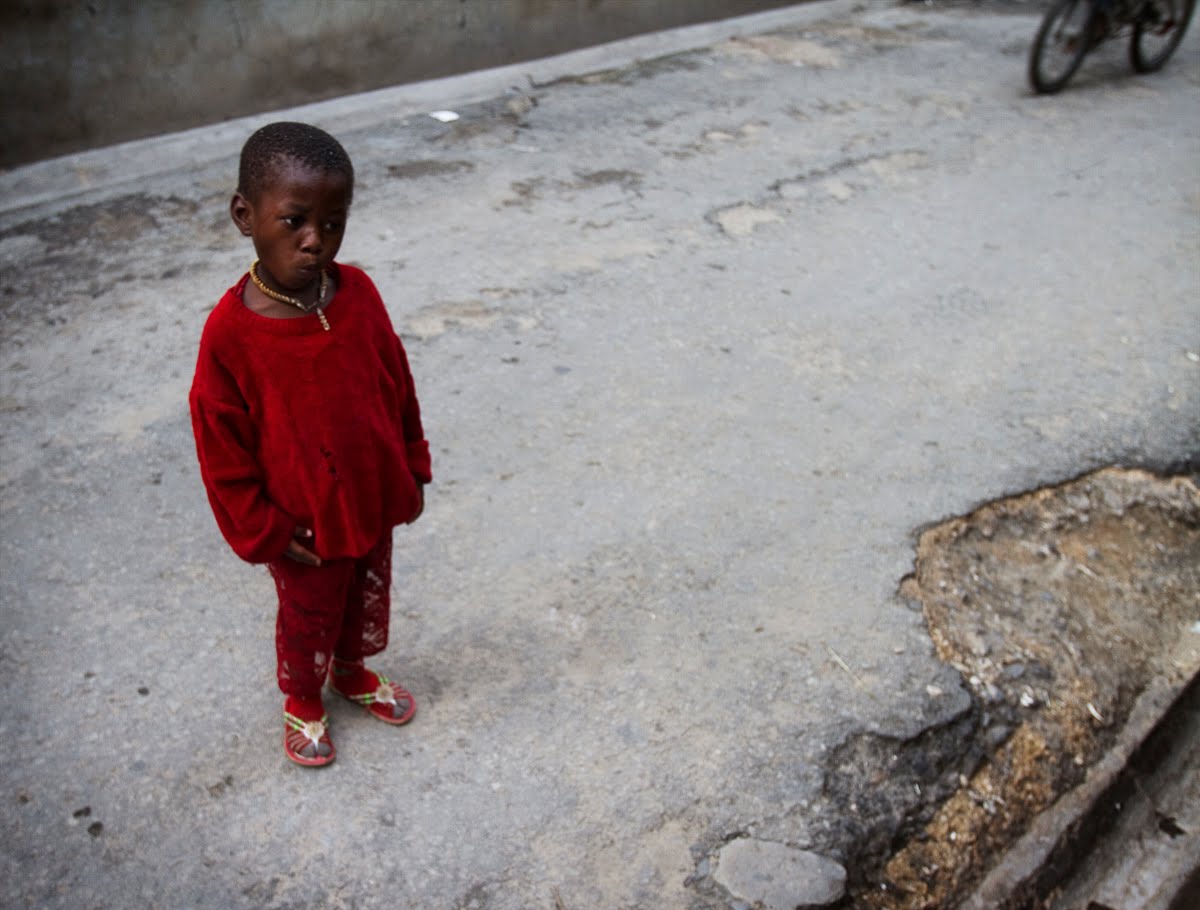
She's got slime all over her little body, but, I suppose, she sure has a beautiful dress.
xo
The Haul

Insult to injury is to be reminded of seafood while traipsing around a landfill. These cans are sorted from a festering, toxic mass, by the hands of children.
Feet Back In the Water
Village Beat meet the Indian Ocean. Ahhhhhhhh. After a month and a half of desert winds and acacia trees keeping shadow over us, we finally made it to the lovely Muslim coast of Mombasa- where coconuts are abundant and a general air of peace lingers over the city (well, relative to most other Kenyan towns). Our translator/fixer/best friend Lemuya (pictured here next to Marianne) put his toes in the sea for the very first time. In awe of every crab and shell and wave ripple and piece of trash floating in the bay, he shouted and gasped with utter joy. To say the least, it was a beautiful reminder of how nothing should be taken for granted. Every moment is new, even if you believe you've experienced something similar. Thanks Lemuya, for inspiring us with your grace and curiosity, and transforming your first day on the coast into a first day for all of us.
xo
xo

...and over here is the livingroom.

Resident:
"someone who lives at a particular place for a prolonged period or who was born there".
Saturday, April 17, 2010
Did you find Simon?

12:30 am, cinched up the green surplus backpack with a camera and light and headed out through the lobby of the New Palms Hotel in Mombasa.
12:31 am: Guard asks, "Why are you going out alone at this hour?" "To find a friend" - a statement that was ambiguous and surely misinterpreted.
12:31-1am: dodged the massive, colorful grasping nails of hookers, the spittle of drunks and the ill-intent of the shadow-lurkers while stopping to talk to anyone who looked friendly about the whereabouts of our friend and street boy Simon (pictured here). As I walked around like Zelda, it occurred to me that it strikes most people here in Kenya as extremely odd to see whitey walking around past his bedtime asking about street children in broken Swahili. It's enough to become what's happening on any block. I produced this photo for onlookers to consider. They'd snatch it, rip off 10 sentences of coast Swahili in 10 seconds, each in some way saying "Yes, I know him, but he has gone to _____". After a half-hour hour of mauling, the photo and I were covered in glue and the party lines were that Simon was either dead, in Nairobi, or could be found in "just-around-the-corner-let-me-show-you-town" (i.e. Hey Jackass, can I rob you?).
1am: I gave up for the night, not wanting to lose the camera or our lucky backpack.
1:15am: One of the especially young street-girl/ prostitutes shouts at me from across the street of a sinister looking club called Casablanca. She says "Bring me that photo!!" I do. A guy slightly bigger than me with home-court advantage says again, "I know him. He's at Tonanoka Center. I take you there now". The girl says I can trust him. After a long look, I decide not to trust him tonight. Bidding thanks I play dumb/tired and stroll down a random street to lose their attention. Some of them casually follow for a block or two and eventually go back to their corner roost.
1:20am Sitting, waiting for inspiration and a quiet street, a tuk-tuk pulls up, stops, driver looks over and beeps. I ask him, "You know Tonanoka Center". "I know it, surely" says he. "Twende" (We go), thinking it couldn't hurt to go to this place on my own, enjoying the anonymous whisk of a tuk-tuk ride.
1:30am 2-3 miles from my hotel street, thinking to myself, "F&ck this is stupid", we pull up at the Tonanoka center, which is nothing more than another abandoned soccer field. It's very dark and the chances of finding anything positive were nillish. As I was saying "OK, we go back", 3 kids wander out of some scrap metal shelter to see about this peculiar noise in their hood. I jump out and show the photos one last time. The 3 of the 4 "boys" were now looking more like withered, malnourished 40 year-old men. They passed it around, hemmed and hawed, scratched and shook...with the exception of Amos, probably 13 years old, who quietly said, "Najua, iko karibu...[something something something]" (I know him, he's here).
With that rare kind of instant, mutual trust, I ask him if he wants to ride along and show me where this place is exactly. He hops into the tuk-tuk and we go further down the dark road.
1:45am Amos is whispering directions over the lawn-mower sound of the tuk-tuk as we go rightleftrightleftleftleftrightupdownaround and finally he says "Hapa, ngoja". (Here, wait). He jumps out and runs through a gate built 100 years ago into some place that looks like a graveyard. The sign on the gate was hand-painted and read Anglican Church Training Center.
Totally skeptical, the tuk-tuk driver turned the engine off and we sat down together on a log.
1:50 After a few minutes of eavesdropping on my driver as he argued presumably with his wife, out of the dark and through the gate comes Amos...with some guy that skip-walked a lot like Simon. As he walked towards us through the headlights of the tuk-tuk, he couldn't see us, but I could see him. The flashbacks began immediately. In moments, I could see him sitting on the beach talking to us last year wearing our crappy wire mic, hearing him tell us about the land taken from him by a malicious relative who still wants to kill him, about how the people of Mombasa won't help his friends because they're outcasts, about the corruption rotting Kenya from the streets to parliament, about his dream to start his own business, starting small with selling eggs on the street, moving up to a small street-side vendor, then renting a place to cook for and seat patrons, then a bigger one, on and on, looking skyward as he spoke.
Here he was again, one year later, and down this dark road in the late evening was not a graveyard, but instead the quiet dormitory of the C.I.T.C. Mombasa College of Catering.
He was as shocked and excited as I was to meet again. Last we heard from him, one year ago was a rushed phone call from a borrowed phone, on the eve of our departure from Kenya, to express his gratitude for our gift of eggs, a stove and a bucket to start his curbside business. His call made a long, hard trip completely worthwhile and thinking about it still chokes me up. I have no idea tonight if our presence in his life last year made any consequential difference for him, but it's possible that Simon's potential was ripe and really only needed the slightest nudge. There are thousands of kids in this country that only need a nudge.
Now here he stood again. Simon was in school, studying to do what he dreamed- proud as hell. We're meeting with him tomorrow to catch up properly.
3:30am I'm finding it hard to sleep.
Subscribe to:
Posts (Atom)